Backseat Offroad Winch and Recovery Guide
Tree anchors, friend-to-friend pulls, cable angles, and calm resets when the mountain wins a round.
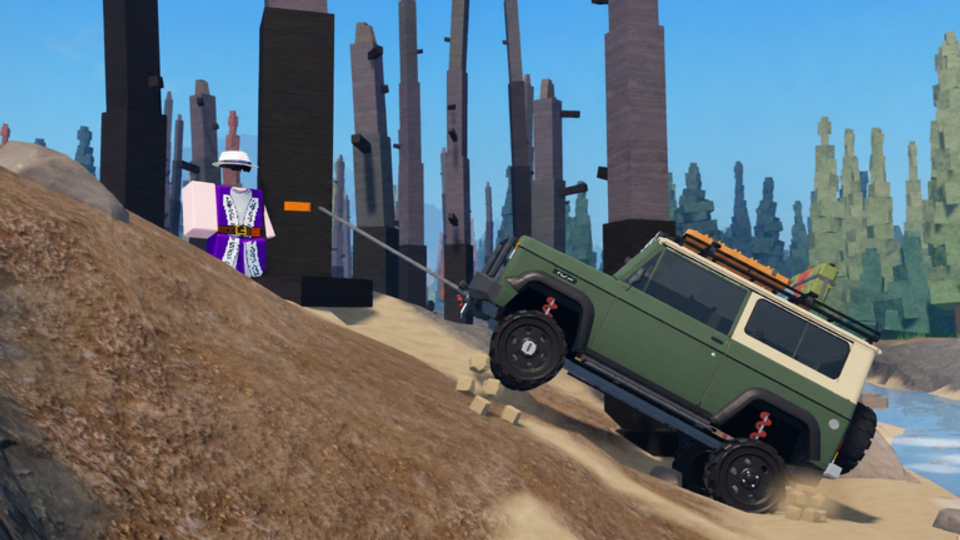
Every Backseat Offroad driver gets stuck. The difference between a five-minute reset and a session-ending flip pile is recovery literacy: when to reverse, when to winch to a tree, when to ask a friend for a bumper pull, and how to keep the cable geometry honest. This guide assumes you already know basic movement from Getting Started and controls. Pair it with climbing tips so you need the winch less often—and with co-op so multiplayer recoveries stay friendly.
Backseat Offroad is a crawl, not a race. There is no timer punishing a careful reset. Take the extra thirty seconds.
Diagnose the stuck before you yank
Pause. Identify what actually trapped the 4x4:
- High-centered: Belly sits on a rock or stump while tires spin free.
- Rutted: Tires dug holes in mud or snow and can no longer climb the walls of their own trenches.
- Cross-axled: Diagonal tires unloaded; lockers may help before a winch.
- Nose-down in water or soft bank: Forward throttle makes it worse.
- Rolled or on its side: Winching the wrong point can finish the fold; plan the upright path first.
Often the fix is not more power. Try lockers on, low range on, gentle reverse along the same track you entered. If tires bite and the chassis moves, keep that line. If they only spray dirt, stop digging and deploy the winch.
Tree winches vs friend 4x4 winches
Tree (or solid world anchor)
- Best when you are solo or when a friend cannot safely approach.
- Choose a trunk that looks substantial in the world—not a sapling or fence post that may not hold a logical attach.
- Prefer anchors uphill or along the escape vector you want the truck to travel.
- Watch for rocks between you and the tree that the chassis will snag as you slide sideways.
Friend 4x4
- Best when trees are sparse, on snow shelves, or when you need a mobile anchor.
- The pulling truck should sit on high-traction ground with low range and lockers ready.
- Agree who throttles first. Usually the stuck truck idles or lightly assists while the recovery truck takes load.
- Keep bystanders clear of the cable line in case of a sudden slip.
Friend winching is also social glue. A clean pull teaches trust for later summit attempts and canoe-assisted scouting runs described in hidden places.
Cable angles and geometry
Think in vectors, not vibes.
- Straight pulls are safest. The truck slides toward freedom with less roll risk.
- Side pulls can rotate a high-centered chassis off a rock—useful—but they also tip tall lifts. Use tiny throttle blips.
- Uphill anchors help you climb out of a hole; downhill anchors can drag you into a worse place if you misjudge.
- Short cables react violently; leave a bit of stretch in how you stage the pull when the UI allows incremental tension.
- Two-stage recoveries beat hero yanks: pull to a safer shelf, reset the anchor, pull again.
If the cab starts leaning hard, stop. Re-hook to a different point or have a second friend stabilize from another direction. Dual recoveries in a twenty-player server are possible—just communicate so cables do not cross into chaos.
Teamwork recovery checklist
- Stuck driver states the problem in one sentence (“high-centered on the gray boulder”).
- Spotter or recovery driver parks on firm ground, not on the same soft shelf.
- Confirm lockers and low range on both trucks as needed.
- Attach, tension slowly, watch the lean.
- Stop when free enough to reverse under own power.
- Clear the trail so the next convoy member is not blocked.
Never AFK in the middle of a one-lane climb while someone is hooked to you. Trail etiquette keeps lobbies pleasant and is covered more broadly in the co-op guide.
River and lake recoveries
Water hides depth changes. If the nose dives:
- Abort forward throttle immediately.
- Reverse if tires still bite.
- If buoyant chaos begins, winch to shore trees or a friend on the bank—not deeper midstream anchors.
- Snorkel builds tolerate more depth, but they do not make sideways rolls in current safe. Crawl, do not charge.
After a wet recovery, take a second to reorient the camera and check that the winch is stowed before you re-enter the forest at speed.
Snow and summit recoveries
Snow reduces both drive traction and anchor confidence. Pack tracks from friends can help or create icy rails. On summit approaches:
- Prefer friend anchors on wind-packed patches over lonely shrubs.
- Keep pulls aligned with the fall line when possible.
- Expect longer stopping distances once free—do not celebrate by flooring it into the next cornice.
- If visibility whites out, wait; winching blind into unseen drop-offs is how highlight-reel fails happen.
When to reverse vs when to winch
Reverse first when:
- You can still see the tracks you made.
- Only one axle is lightly buried.
- You entered a ditch straight and have room behind.
- Lockers plus low range move the truck even a little.
Winch first when:
- Tires dig deeper with every attempt.
- You are belly-hung with wheels unloaded.
- Forward and reverse both increase lean toward a roll.
- Water or snow made the entry path collapse.
Reset / respawn thinking when:
- The truck is fully inverted in a place where uprighting would take longer than a calm reset allowed by the experience.
- You are blocking a popular line and a queue is forming—be kind, clear the road.
Common mistakes
- Full throttle the instant the cable tightens.
- Hooking a friend who is themselves parked in mud.
- Pulling downhill into deeper water “just to straighten out.”
- Leaving lockers off during a recovery that needs every tire.
- Leaving lockers on afterward and understeering into the recovery tree.
- Forgetting the winch is still attached and dragging a friend off a ledge.
- Treating comedy fail videos as the intended play pattern—laugh, then apply the lesson.
Practice course near the lake
Build confidence before the alpine village runs:
- Park a rear tire in a shallow ditch; winch to a lakeside tree.
- Intentionally cross-axle on a root; try lockers before winch.
- With a friend, practice bumper pulls on grass with both trucks in low range.
- Stage a two-step pull: ditch to shelf, shelf to trail.
Then climb. When comparing which garage 4x4 feels most stable under cable load, note it in your own tier notes and cross-check the vehicles tier list.
Mindset
Recovery is part of the fantasy of Backseat Offroad. The mountain is supposed to push back. A clean winch line, a patient friend, and a willingness to reverse early will take you farther toward the snowy summit than any engine swap alone. Keep exploring hidden places with a charged sense of caution—cabins and viewpoints are more fun when you arrive upright.
Frequently Asked Questions
Quick answers for climbing, winching, and exploring the mountain.
Should I winch to a tree or to a friend?
Use a solid tree when you are solo or anchors are nearby. Use a friend 4x4 when trees are sparse, on snow shelves, or when you need a mobile pull from firm ground.
Why does winching flip my truck?
Usually the cable angle is too sideways, throttle is too sudden, or the truck is already leaning. Stop, re-hook straighter, and tension slowly.
When is reversing better than winching?
Reverse when you can still follow your entry tracks and low range plus lockers produce movement. Winch when tires only dig deeper or the belly is hung.
How do we recover someone in water?
Stop forward throttle, reverse if possible, then winch to a shore tree or a friend on the bank. Avoid midstream anchors that pull you deeper.
Is getting stuck considered failing in Backseat Offroad?
No. There is no race timer. Recovery is a core skill—reset calmly and keep crawling.