Climbing Tips for Backseat Offroad
Low range, lockers, tire placement, momentum versus crawl, snow lines, and water crossings that stay upright.
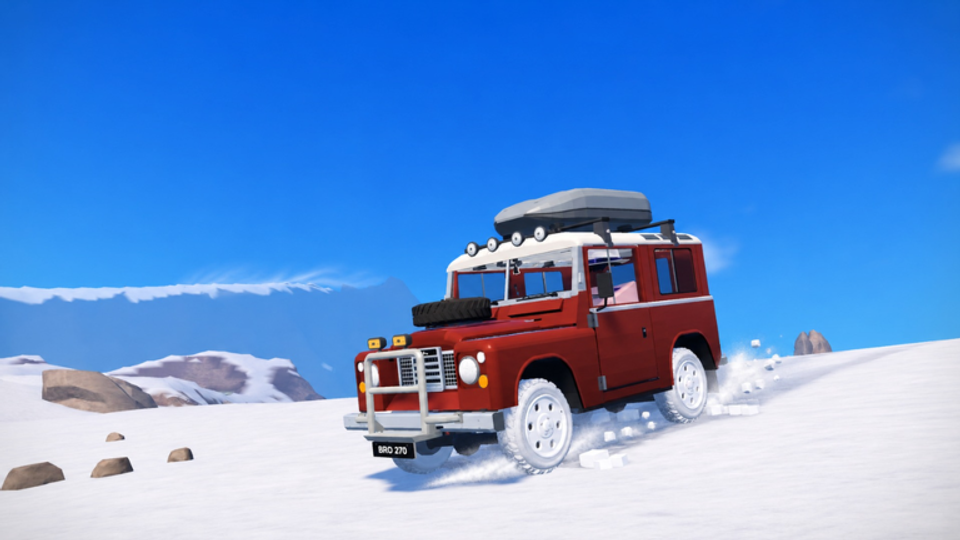
Climbing in Backseat Offroad is a conversation with gravity. The five old 4x4s all have low range and differential lockers for a reason: the route from lakeside forest to snowy summit punishes arcade throttle. This guide focuses on line choice and drivetrain timing. Bring controls for bind reminders and winch and recovery for when the conversation with gravity ends poorly. New players should skim Getting Started first.
Remember: this is not Backseat Rally. There is no stage timer. The fastest-looking line is often the one that strands you on a door panel.
Low range as default climbing gear
Shift into low range before the slope steepens. The goal is slow tire rotation with high torque so rubber can find edges instead of polishing them into ice. Signs you engaged too late:
- Engine revs climb while the truck sinks.
- You bounce off a ledge instead of hooking it.
- You need a panic winch halfway up a stair you could have crawled.
Signs you can return to higher range:
- The trail flattens into a forest road.
- You need a short stretch of speed to clear a puddle run without digging—still be gentle.
- You are descending a long grade and want more predictable engine braking feel if the game models it through gear choice.
Make low range muscle memory on lakeside practice hills before you trust it in whiteout summit weather.
Diff lockers: commit, then release
Lockers shine on uneven rock where one wheel unloads. Engage them when you see a cross-axle moment coming—diagonal tires, off-camber shelves, root lattices. Drive straight enough that locked axles pull through. After the obstacle, unlock for the next switchback so the truck can rotate between trees.
A useful co-op callout is “locking” / “open” so spotters know whether to expect a wider turning arc. More multiplayer climbing habits live in the co-op guide.
Tire placement over bravery
Pick where each tire will sit before you roll forward.
- Aim tires at the high parts of rocks so the belly clears.
- Straddle ruts instead of dropping both sides into the same trench.
- On slab rock, keep at least one tire on a textured seam rather than a polished face.
- If a boulder forces a bad lean, back up and try a different clock position around the rock instead of forcing the first idea.
Walk the line on foot when the experience allows. A thirty-second scout prevents a ten-minute recovery.
Momentum versus crawl
Most of Backseat Offroad wants a crawl: low range, steady throttle, constant steering corrections. Momentum helps only in specific cases:
- A short sandy lip where tires need a little speed to crest before they dig.
- A shallow snow drift that stops soft trucks if you arrive already spinning.
- A tiny gap between rocks where a dead stop leaves you perched on a point.
Momentum fails when:
- The far side is a blind drop.
- The surface is wet roots or sheet rock.
- You are off-camber with a tall lift.
- A friend is winching and your surge yanks the cable sideways.
Default to crawl. Add a sip of momentum only when you can see the landing.
Boulder and rock-stair lines
Read stairs as a sequence of tire bites. Square the truck to the step when possible so both front tires hit together. If the stair is offset, let one tire hook first while lockers keep the unloaded side turning. Avoid diagonal launches that twist the chassis into a tip.
When a boulder field looks chaotic, mark a “left-left-right” mental path using landmarks—distinct trees, cabin roofs, or snow patches—so you do not improvise every meter. Convoy leaders should announce the path once; followers mirror tire tracks instead of inventing parallel chaos that destroys the only clean line.
Snow approaches to the summit
Snow changes everything: braking, steering, and winch anchor quality.
- Arrive in low range already; do not downshift mid-wheelspin.
- Keep steering inputs early and small.
- Follow existing packed tracks if they go where you want; avoid polishing a new glaze beside them without reason.
- Watch for cornices and soft shoulders near scenic drop-offs—viewpoints are common near the summit aesthetic, and they tempt bad parking. Explore carefully with ideas from hidden places.
- If the truck starts a slow slide, steer into the slide gently and reduce throttle; a winch to a friend above is better than a heroic countersteer into a tree.
Water crossings and snorkels
Rivers and lake edges reward patience.
- Scout depth. Send a canoe buddy or walk the bank.
- Enter slowly straight-on when possible; side-hill water entries roll tall builds.
- Snorkel upgrades expand the safe envelope but do not invite full-throttle wakes.
- If the hood dives, reverse immediately. Winch to shore if reverse fails.
- Exit on the shallowest ramp you can find, not the prettiest photo angle.
Treat snorkels as tools for intentional crossings on your route toward mid-mountain cabins, not as a license to invent underwater shortcuts.
Engine swaps and throttle recalibration
Engine swaps change how far you press the pedal for the same crawl speed. After any swap:
- Find a short known hill near the lake.
- Climb it in low range with lockers as you normally would.
- Note how early wheelspin arrives.
- Adjust your foot before you attempt a new personal best on the summit road.
More power without better placement just digs uglier holes. Pair swaps with lift awareness: taller trucks need even calmer inputs on off-camber snow.
Lifts and center of gravity
Suspension lifts help clear belly scrapes on rock stairs but raise the tip point. After lifting:
- Relearn side-hill limits on a mild slope.
- Prefer straighter climbs over dramatic diagonal hero lines.
- Be extra humble when a winch cable adds side force.
If a lift makes your favorite beginner truck feel scary, try a more stable garage option from the vehicle tier list for summit days and save the tall build for technical rock near the forest.
Descent discipline
Climbing guides often ignore going down. Descents flip as many runs as ascents.
- Point tires downhill with control; avoid sideways slides on slab.
- Use low range to keep speed in check.
- Do not ride the brake into a skid if that unlocks traction entirely—modulate.
- Give convoy gaps so a sliding friend has room.
Mini practice loop
- Lakeside root climb with lockers cycling on and off.
- Three-step rock stair focusing on tire highs.
- Shallow water entry and exit with snorkel if equipped.
- Short snow or light-colored dirt pitch practicing early steering.
- Intentional stop mid-climb to deploy and stow winch without panic.
Finish the loop, then push one ridge higher each session. For role-based truck picks—rock crawl versus snow summit versus beginner forgiveness—compare notes on the vehicles page. Keep codes and updates in mind when patches tweak traction.
Climbing well in Backseat Offroad means choosing boredom on purpose: slow gears, honest lines, and early aborts. The summit looks better when you arrive on all four tires.
Frequently Asked Questions
Quick answers for climbing, winching, and exploring the mountain.
Should I always climb in low range?
Use low range for steep rock, mud, and snow. On long easy forest flats you can shift out, but engage again before the next serious pitch.
When do diff lockers help most?
When a tire unloads on uneven rock or ice. Lock to force both sides to pull, then unlock for tight turns on firmer ground.
Is momentum useful in Backseat Offroad?
Only in short, visible crests where a crawl would dig. Blind drops, wet slab, and off-camber lifts want a slow crawl instead.
Do engine swaps make climbing automatic?
No. They change throttle feel. Recalibrate on a known lakeside hill before you take a swapped engine to the summit.
How should I cross water?
Scout depth, enter slowly in low range, use a snorkel if you have one, and reverse early if the nose dives. Winch to shore if needed.